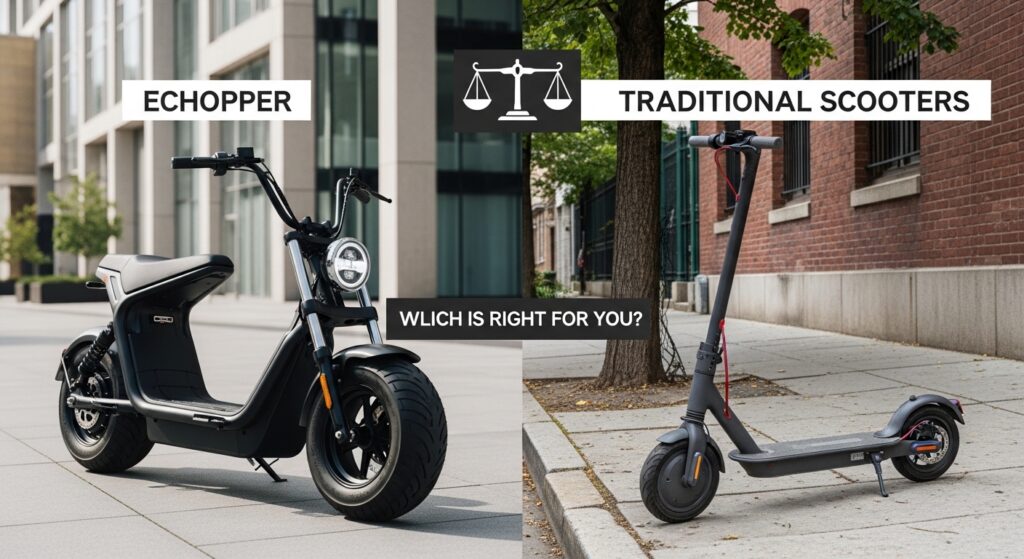
The world of personal transportation is evolving rapidly, and two popular options are creating quite the buzz: EChoppers and traditional scooters. Both offer unique benefits, making them appealing choices for urban commuters or weekend adventurers alike. But how do you know which one is right for you? Whether you’re seeking a stylish ride to zip through city streets or a reliable scooter that gets you from point A to B, understanding the differences between these vehicles can help guide your decision. Dive in as we explore their histories, advantages, environmental impacts, costs, and riding experiences to find the perfect match for your lifestyle!
A Brief History of Scooters and Their Evolution into EChoppers
Scooters have a rich history that dates back to the early 20th century. Originally, they were simple wooden platforms with wheels and operated by foot power. As the decades passed, scooters evolved with advancements in technology.
By the mid-1900s, metal frames replaced wood, offering more durability and style. The introduction of gasoline engines further transformed these two-wheeled vehicles into faster options for urban commuting.
In recent years, electric scooters emerged as an eco-friendly alternative. They gained popularity due to their convenience and ease of use. This paved the way for EChoppers—stylish electric scooters that combine retro designs with modern features.
EChoppers stand out not just for their aesthetics but also for enhanced performance and comfort. With longer ranges and better battery life, they cater to a new generation seeking sustainable transportation without sacrificing style or speed.
The Advantages and Disadvantages of Each Type of Scooter
Electric scooters, or eChoppers, bring an exciting twist to urban mobility. They offer silent rides and zero emissions, making them eco-friendly options. Their range often exceeds that of traditional scooters, providing longer journeys without frequent charging stops. Plus, the sleek design adds a modern flair to your ride.
On the flip side, eChoppers can be more expensive upfront than their gas counterparts. Charging stations might not always be convenient for everyone. Maintenance can also become tricky if specialized parts are needed.
Traditional scooters have been around for decades and offer reliability at lower costs. They’re easy to refuel and usually require less maintenance overall due to their simpler mechanics.
However, they come with noise pollution and carbon emissions. Speed limits may restrict your travels compared to what an eChopper can handle on open roads or bike lanes. Each option has unique traits catering to different rider preferences.
Environmental Impact: EChopper vs Traditional Scooters
Electric scooters, especially EChoppers, have gained attention for their eco-friendly attributes. With zero emissions during operation, they contribute to cleaner air in urban environments. As cities become more congested with traffic and pollution, these electric vehicles offer a sustainable alternative.
Traditional scooters often rely on gasoline engines. This leads to higher carbon footprints and contributes to ongoing environmental concerns. The noise pollution from gas-powered models can also disrupt communities.
EChoppers typically use rechargeable batteries that can be powered by renewable energy sources, further enhancing their green credentials. However, the production of batteries has its own environmental impact that must not be overlooked.
Choosing an EChopper over a traditional scooter often aligns with environmentally conscious values. Riders seeking sustainability might find themselves drawn to the quieter and cleaner ride offered by electric options as cities strive for greener transportation solutions.
Cost Comparison: Initial Investment and Maintenance Costs
When considering an eChopper, the initial investment can be significant. Prices typically range from a few hundred to several thousand dollars, depending on the model and features. High-performance options often come with premium price tags.
On the other hand, traditional scooters are generally more budget-friendly at purchase. You can find decent models for less than half the cost of some eChoppers.
Maintenance costs also differ greatly between these two types. EChoppers usually require periodic battery replacements and software updates that can add to long-term expenses. However, they tend to have fewer mechanical issues compared to traditional scooters due to their simpler designs.
Traditional scooters may need regular oil changes and part replacements over time. While upfront costs are lower, ongoing maintenance might accumulate quickly if you’re not careful.
Understanding your budget helps in deciding which scooter fits your lifestyle better.
Riding Experience: Speed, Handling, and Comfort
When it comes to speed, EChoppers often outpace traditional scooters. With powerful electric motors, these machines can accelerate quickly and maintain higher top speeds on city streets.
Handling is another key factor. EChoppers typically boast a wider frame and larger tires, providing stability during turns. This design allows for easier maneuverability in urban environments compared to their more compact counterparts.
Comfort plays an essential role too. Many EChoppers feature cushioned seats designed for longer rides, making them ideal for commuting or leisurely journeys. Traditional scooters may offer less support but are usually lighter and easier to carry when not in use.
Riders appreciate the smoothness of electric acceleration on EChoppers versus the kick-start feel of gas-powered scooters. Each type has its own unique charm when it comes to navigating through traffic or cruising down scenic routes.
Who Should Choose an EChopper? Who Should Stick with a Traditional Scooter?
EChoppers are perfect for those who crave a blend of style and sustainability. If you enjoy longer rides, the battery range and comfort features make them an appealing choice. The unique design also attracts riders looking to stand out in urban settings.
On the other hand, traditional scooters suit individuals seeking simplicity and convenience. They’re lightweight, easy to maneuver, and ideal for quick trips around town or commuting short distances.
Families might lean toward traditional models due to their lower cost of entry. For casual riders not ready for the investment that comes with EChoppers, classic scooters provide a reliable alternative.
Those focused on environmental consciousness may find EChoppers align better with their values but will need to consider charging accessibility in their area. Each type has its strengths; it really depends on your lifestyle needs and riding preferences.
Conclusion
When it comes to choosing between an EChopper and a traditional scooter, several factors come into play. The decision ultimately depends on your lifestyle, preferences, and specific needs.
If you value sustainability and want a unique riding experience, the EChopper might be your best bet. It’s perfect for those who enjoy leisurely rides through urban environments while minimizing their carbon footprint.
On the other hand, if you’re looking for something more compact that fits easily into busy life or public transport settings, a traditional scooter could suit you better. They’re generally easier to store and maintain.
Consider the costs involved as well; while an EChopper may have higher upfront expenses due to its advanced features, the long-term savings on fuel can be significant compared to gas-powered scooters.
Whether it’s speed or comfort that matters most will guide your choice. Reflecting on how you’ll use your scooter will lead you closer to making the right decision. So think about what suits you best—whether that’s cruising around town on an electric chopper or zipping through traffic on a classic model—and ride with confidence!